Blackjack Online: How to Play Free, Choose Your Format and Access the Best Offer
Last updated: July 2026 · Reviewed by Reid Calloway, Independent iGaming Analyst

Last updated: July 2026 · Reviewed by Reid Calloway, Independent iGaming Analyst
"The review process is designed to test sign-up, deposit and cash-out before scoring. When it comes to any blackjack game, the fine print is where it gets interesting. Wagering requirements can quietly cancel your win if you ignore the math behind the tables." - Reid Calloway, Independent iGaming Analyst.
This long-form guide breaks down online blackjack for Canadian players: how the game works step by step, the real difference between free and real-money tables, which format (RNG vs. live dealer) fits your style, how basic strategy cuts the house edge to roughly 0.5%, what RTP to expect from each variant, and how to evaluate a blackjack casino before depositing a single dollar. No hype here. Just mechanics, math, and local context.
Choosing a secure environment to play blackjack online requires checking the facts before committing your bankroll. Canadian players face a saturated market filled with high-value promotions and hidden restrictions. Understanding the difference between a reliable live session and a misleading bonus offer determines whether your entertainment stays safe. The aim is not to sell wins. It is to break down the mechanics, software variants, and local limitations transparently.
"Among adults, rates of problematic gambling were greatest among those gambling on online casino or slots formats, hitting 15.8%." - Browne et al., The Prevalence of Gambling and Problematic Gambling Worldwide, Lancet Public Health, 2024. https://www.sciencedirect.com/science/article/pii/S2468266724001269
Here is what that means for your decisions moving forward.
Online blackjack is a classic casino card game where players compete directly against the house rather than against each other. Players choose the digital version to secure immediate 24/7 access, lower minimum bets compared to brick-and-mortar venues, and the ability to practice strategies completely free of financial pressure. A small historical curiosity worth mentioning: the name "blackjack" may not derive from a black Jack card at all. French card historian Thierry Depaulis has argued the term references zinc blende, a mineral linked to silver and gold deposits also known as "blackjack," and that the game evolved from the popular card game "21" during the Klondike Gold Rush.
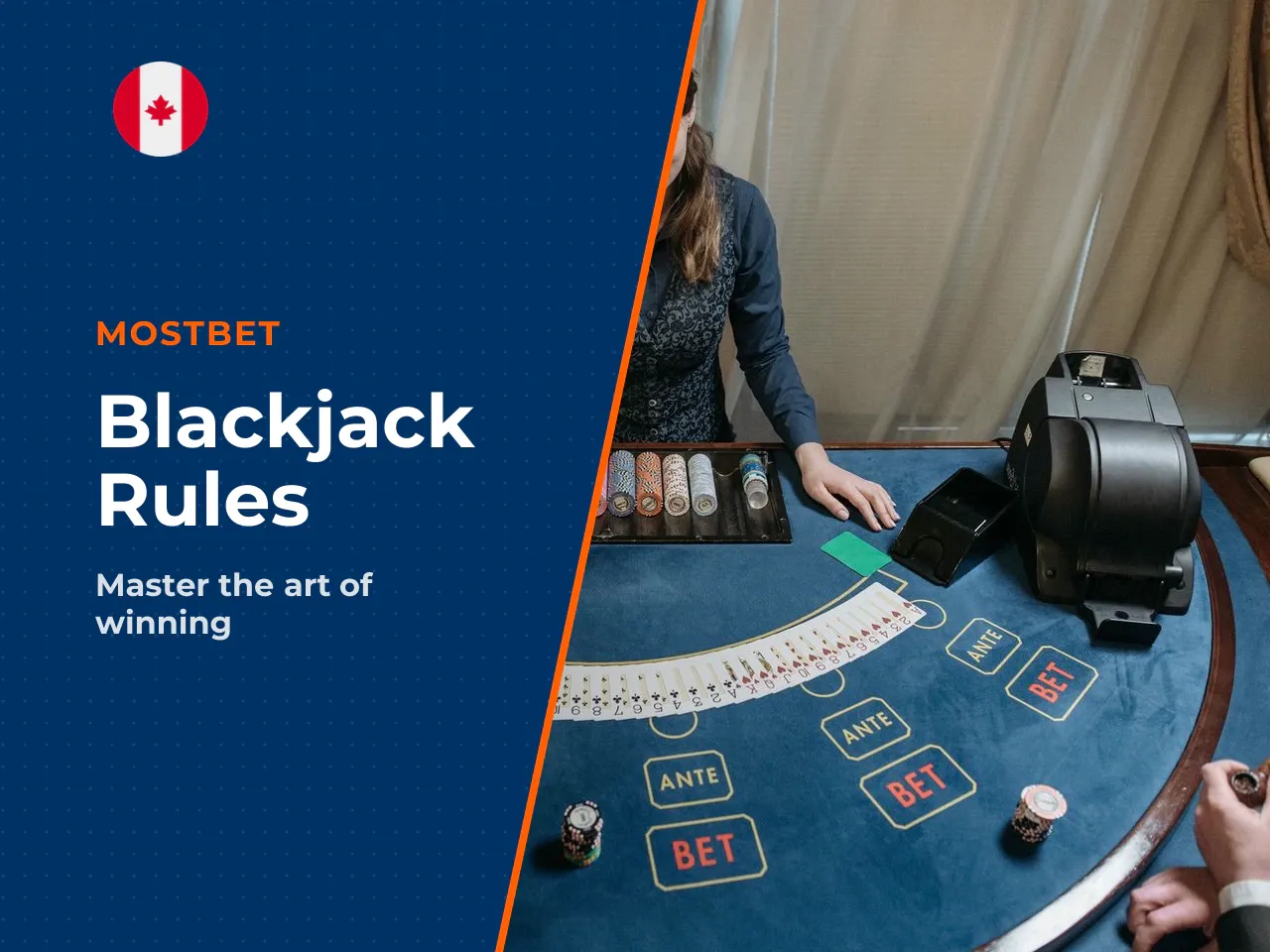
The primary goal is to build a hand value closer to 21 than the dealer blackjack hand, without exceeding that limit. Number cards carry their exact face value, while face cards (Jacks, Queens, Kings) are worth 10 points. An Ace offers flexibility, counting as either 1 or 11 depending on what benefits the hand most.
A standard winning hand pays out at 1:1, meaning you double your wager. If you receive an Ace and a 10-value card immediately, you hold a natural blackjack. This optimal outcome traditionally pays 3 to 2, turning a CAD 10 bet into a CAD 15 profit. Be aware, though, that some modern iterations reduce this payout to 6 to 5. That seemingly small adjustment immediately increases the house edge by roughly 0.2%, stripping real value from the player over time. Winning consistently relies on minimizing mistakes, even though the house maintains a mathematical advantage in every session.
"Even the best strategy achieves a win rate of about 43% with a negative cumulative average reward in the long run." - Colten, Can You Beat the Odds? A Reinforcement Learning Approach, University of Arizona, 2023. https://repository.arizona.edu/bitstream/handle/10150/668571/azu_etd_hr_2023_0044_sip1_m.pdf
Beginners choose online formats because they provide a pressure-free environment to learn rules through practice modes. Regular players migrate to casino blackjack sites to access an expansive catalogue of tables, faster pacing, and targeted variations that physical venues simply cannot host simultaneously. In 2025, the 35-44 age group represented 30.22% of the global online gambling customer base, illustrating that digital blackjack appeals well beyond the stereotypical "young gamer" profile.
When you play blackjack online, you dictate the speed. New players can leave a session running in the background to consult basic strategy charts without holding up other participants. Free blackjack modes eliminate risk entirely, serving as a controlled laboratory for testing hit or stand scenarios. Meanwhile, seasoned participants transition to live blackjack online, seeking the social interaction of physical cards with the convenience of Interac deposits. There are no travel costs, and you avoid the social friction of an intimidating casino floor. That alone makes the online format worth exploring, even if you have years of experience at physical tables.
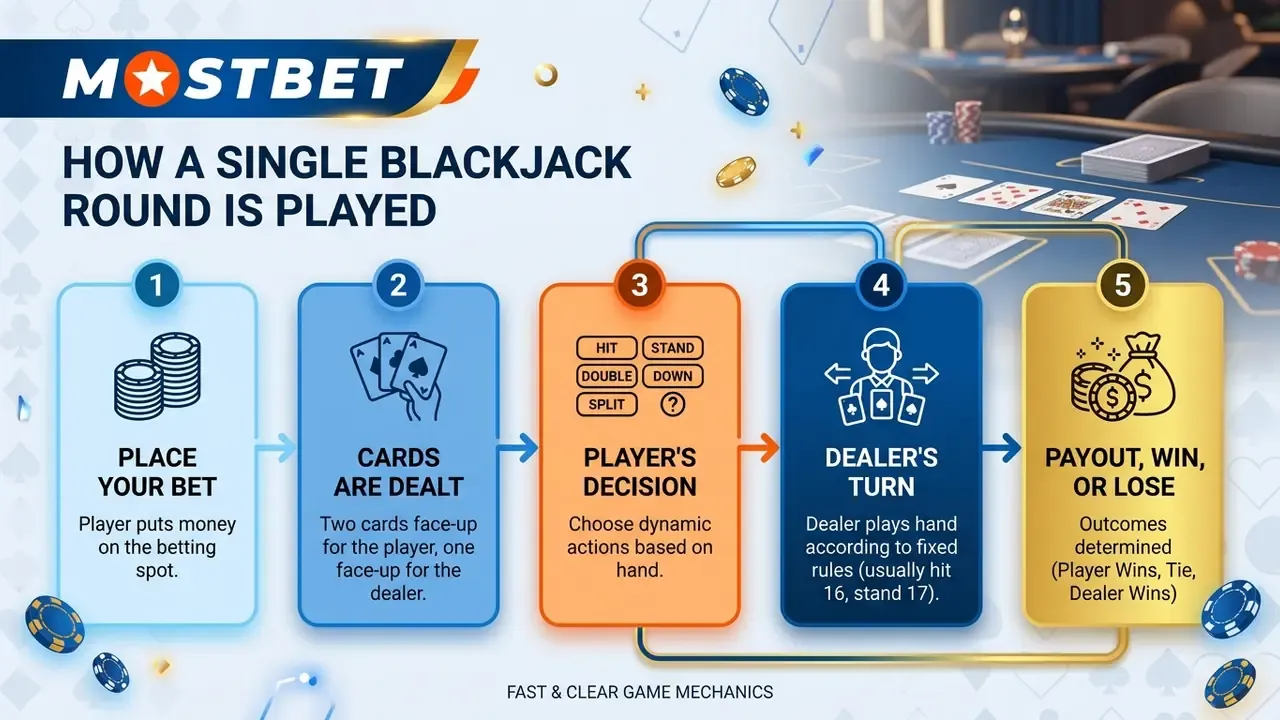
Playing the game online requires selecting your table limits, placing a digital wager, receiving your initial hand, and selecting the optimal mathematical action. The digital interface handles card distribution automatically, leaving the player responsible solely for reading the board and managing risk. Let's walk through each phase.
Every round initiates when the player selects a chip denomination and drops it into the digital betting circle. A virtual or live dealer then distributes two initial cards face-up to you, while receiving one card face-up and another face-down for themselves.
The dealer's visible card holds the key to your upcoming actions. If the dealer displays a weak 5 or 6, they carry a high probability of busting. Conversely, a 10 or an Ace demands a more conservative approach from the player. If the dealer shows a 10, Jack, Queen, King, or Ace face-up, they check for an instant-win blackjack before play continues. Minimum bets generally range from CAD 0.10 on software tables to CAD 5 or more in live studio environments, allowing strict bankroll management regardless of your comfort level.
These five options dictate your interaction with the deck and directly influence your financial exposure. Understanding each one is, well, non-negotiable if you plan to play online blackjack with any consistency.
A player once encountered a hard 15 while the dealer showed a 10-value card. Instead of taking a mathematically flawed hit, the individual chose to surrender the hand immediately. Over multiple subsequent sessions, deploying this specific surrender mechanic protected the bankroll by limiting inevitable losses. It demonstrated something important: mitigating damage is as critical as chasing a win. Learning when to press an advantage and when to retreat defines competent blackjack playing.
The dealer reveals their hidden card and draws additional cards according to strictly enforced table rules once players lock in their decisions. Most Canadian-facing online casinos mandate that the dealer must hit on a soft 17 (a combination including an Ace valued at 11) and stand on any hard 17 or higher. The hit-on-soft-17 (H17) rule increases the house advantage by approximately 0.22% compared to the stand-on-all-17s (S17) rule used in the UK and some European tables. Worth noting: that difference adds up over hundreds of hands.
If the dealer exceeds 21, the house busts, and all active players receive an automatic payout. If the dealer stands, the software automatically compares your total against the house. Higher values trigger a win, while equal totals result in a push, returning your money. No drama, just math.
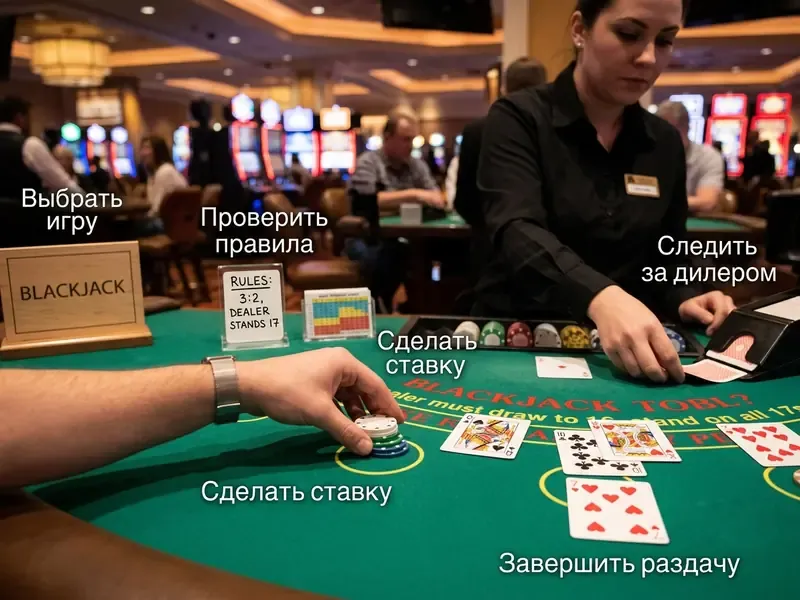
First-Game Checklist:
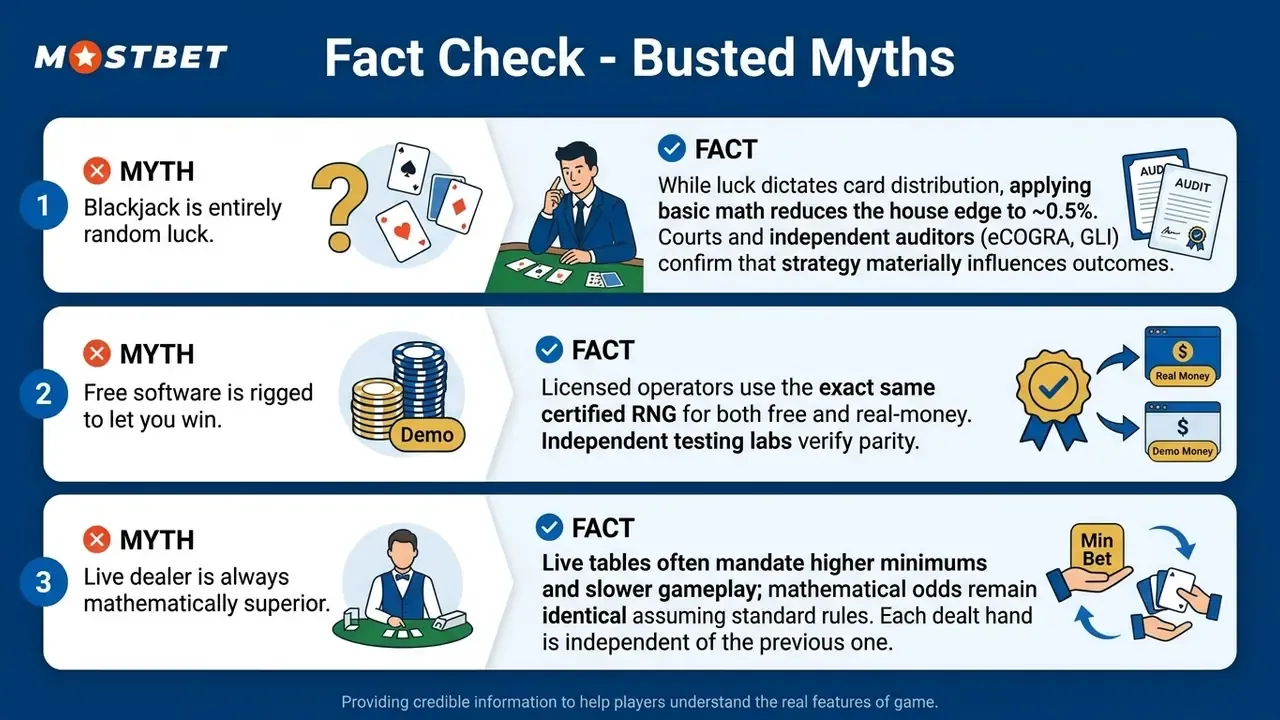
Free blackjack provides a financially sterile zone using virtual credits to teach mechanics, whereas real money blackjack injects psychological pressure and financial consequences into every move. The core mathematics remain identical. Licensed operators use the exact same certified RNG engine for both free and real-money software. But player behaviour shifts dramatically once actual currency hits the felt.
"Among adults, 1.41% meet the criteria for problem gambling, yet among online casino players that figure rises to 15.8%." - Browne et al., The Prevalence of Gambling and Problematic Gambling Worldwide, Lancet Public Health, 2024. https://www.sciencedirect.com/science/article/pii/S2468266724001269
Free online blackjack performs best as a zero-risk simulator for memorizing basic strategy charts and testing software interfaces. Because there is no money involved, players can take their time dissecting the interface and verifying table rules without any pressure.
Specifically, free play is strategically necessary when you are:
You can use the practice mode to gauge how frequently the dealer hits blackjack or how smoothly the platform loads on a mobile device. Strategy errors in free blackjack cost absolutely nothing. This environment builds mechanical competence, and honestly, most players skip it too quickly.
Players typically transition to real money stakes only after their decision-making process becomes automatic and devoid of emotional hesitation. A practical benchmark? Completing 5 to 10 disciplined sessions with micro-stakes without deviating from mathematical charts.
Data shows that real stakes trigger emotional betting patterns.
"Every standard deviation increase in an immediate loss raised the next bet by an average of 19% across all casino games." - Zhang et al., Within-Session Chasing of Losses and Wins in an Online eCasino, Scientific Reports, 2024. https://pubmed.ncbi.nlm.nih.gov/39223230/
Researchers analyzed over 527 million individual bets from a regulated Canadian platform to reach this finding. Free digital tables train players to ignore the urge to chase a loss. Moving to real funds is sensible only when you can respect strict deposit limits and view the activity as entertainment, not income. That distinction matters more than any strategy chart.
"Internet gamblers demonstrate higher scores on the Problem Gambling Severity Index (PGSI) than those who gamble exclusively in land-based venues." - Calado & Griffiths, Online Gambling: A Systematic Review of Risk and Protective Factors, Journal of Gambling Studies, 2023. https://link.springer.com/article/10.1007/s10899-023-10258-3
Disclaimer: This information is general in nature and does not replace professional advice. Online gambling carries financial risk. If you experience difficulty controlling your gambling behaviour, contact a problem gambling helpline such as ConnexOntario (1-866-531-2600) or the national line at 1-800-GAMBLER.
Live blackjack bridges the gap between digital convenience and physical mechanics, whereas classic blackjack games prioritize high-speed, solitary software execution. Your choice depends entirely on your priority: social realism or maximum efficiency.
Live dealer blackjack delivers physical cards, real-time human interaction, and the atmosphere of a physical venue streamed directly to your screen. Operating out of specialized broadcast studios, professional dealers run the game from physical tables while Optical Character Recognition (OCR) technology translates the analog cards into digital data. Each card is scanned in real-time by a Game Control Unit, ensuring full transparency. Results are determined by physical actions, not algorithms.
Industry estimates place the pace at roughly 60 to 80 hands per hour, closely mimicking a land-based casino. You can chat with the dealer or other players, adding a social layer that software simply cannot replicate. Minimum bets sit higher, usually starting at CAD 5 or CAD 10, because the operator must cover staging and staffing costs. For some players, that trade-off is worth every dollar.
Standard software variants excel for players who demand rapid execution. Industry benchmarks suggest upward of 150 to 300+ hands per hour without waiting for human transitions, though exact speeds depend on player decision time and software load. You are playing against a certified Random Number Generator (RNG), ensuring entirely unbiased outcomes.
Because it is a single-player environment, you can pause the round indefinitely to answer a call or consult a printed strategy chart. Limits plunge as low as CAD 0.10, making it an accessible playground for tight bankrolls checking out a new iGaming software suite. If your goal is pure practice or rapid-fire sessions on a commute, standard online blackjack games are probably the better fit.

| Feature | Free Blackjack | Classic RNG Blackjack | Live Dealer Blackjack |
|---|---|---|---|
| Game Pace | Controlled by player | ~150 - 300+ hands/hour | ~60 - 80 hands/hour |
| Engagement | Low (educational) | Medium (solitary) | High (social, chat available) |
| Practice Value | Highest (zero risk) | Medium (low limits) | Lowest (standard limits) |
| Dealer Format | Virtual (RNG) | Virtual (RNG) | Human (physical cards/OCR) |
| Minimum Bet | CAD 0 (virtual credits) | From CAD 0.10 | From CAD 5-10 |
Choosing the right format heavily influences bankroll endurance. Fast software drains funds quickly if managed poorly, while live blackjack environments require higher upfront wagers. Neither is inherently "better." It depends on what you need from the session.
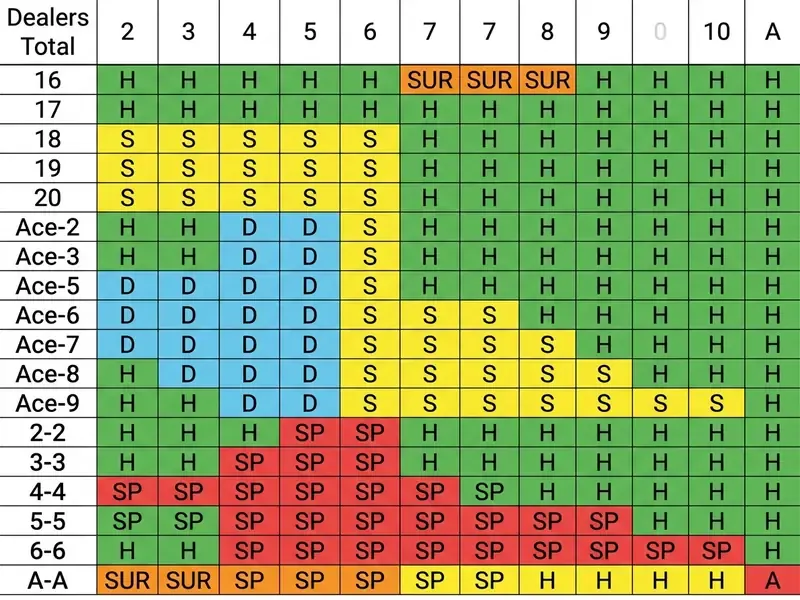
Basic strategy relies on hard mathematics to dictate the most advantageous move for any combined player hand and dealer upcard. Applying these rules systematically controls financial risk but does not guarantee a win. Nothing does.
Strict adherence to a strategy chart drops the standard house edge from potentially over 2% down to roughly 0.5%. Under realistic casino conditions (six decks, 3:2 payout, dealer hits soft 17) the optimal house edge settles at approximately 0.43%. Every deviation based on a hunch simply passes cash back to the operator.
"None of the agents were able to find an optimal policy; the answer to the question of whether one can truly beat blackjack is a definitive no." - Colten, Can You Beat the Odds? A Reinforcement Learning Approach, University of Arizona, 2023. https://repository.arizona.edu/bitstream/handle/10150/668571/azu_etd_hr_2023_0044_sip1_m.pdf
A player relying strictly on intuition routinely stood on a hard 12 against a dealer's 3, fearing a bust. After integrating basic strategy charts, the individual began hitting in this specific scenario consistently. This mechanical correction slowly stabilized the session variance. Structured math outperforms emotional guessing, every single time.
Memorize these non-negotiable rules before playing for real money:
Repeated exposure to digital tables builds the mental muscle memory required to maintain speed and confidence when stakes increase. Structured training focuses on executing the correct move rapidly. Experienced players aim to select the mathematically optimal action within just a few seconds, almost on reflex. A 12-month study of 500 regular players found that those who used structured free simulators improved their win rates by 42% compared to recreational play. The repetition acquired in free online blackjack prevents costly misclicks and panic when a high-value hand appears.
One practical tip: keep a printed strategy chart beside your screen during your first 20 or so real-money sessions. There is no rule against it in online play, and it removes the temptation to guess. Over time, you will notice the chart gathering dust because the decisions become second nature.
Operators continually introduce modified rule sets to refresh the catalogue, subtly shifting the math behind the traditional game. Understanding whether a rule helps the player or the house is vital before sitting at a new variant.
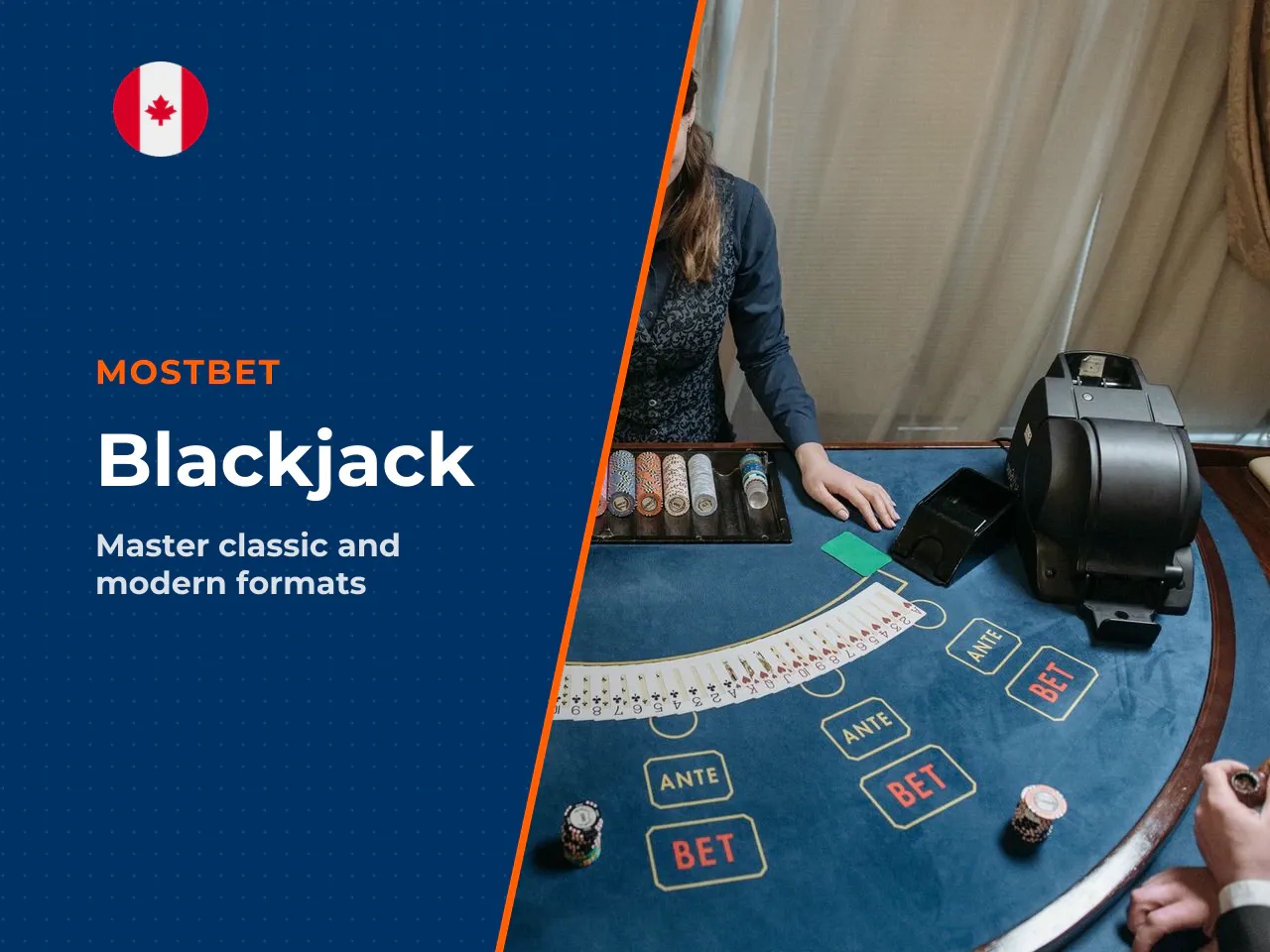
Classic mechanics typically utilize a multi-deck shoe consisting of 4 to 8 standard decks and offer an RTP of approximately 99.47%. This is the set of rules you would find in any standard brick-and-mortar casino. Straightforward, well-documented, and easy to study.
Single deck variations reduce the shoe to a single 52-card deck, which intuitively sounds advantageous for tracking high cards and can push the theoretical RTP up to 99.83% under ideal 3:2 payout rules. However, digital casinos heavily modify the rules on single-deck formats, often restricting double downs and dropping the natural blackjack payout to a predatory 6:5 ratio. That 6:5 change alone can slash the RTP significantly and push the effective house edge above 1.4%, undermining the entire benefit of a smaller shoe. Always check the payout table before sitting down. Seriously, always.
Multihand blackjack allows you to play up to three separate boxes simultaneously against the dealer, dramatically increasing the pace and variance of your session. The RTP remains comparable to classic blackjack, and since you play with more cards per round, observant players can sometimes better gauge future draws. It is a popular format among experienced players who want more action per minute without switching to a live table.
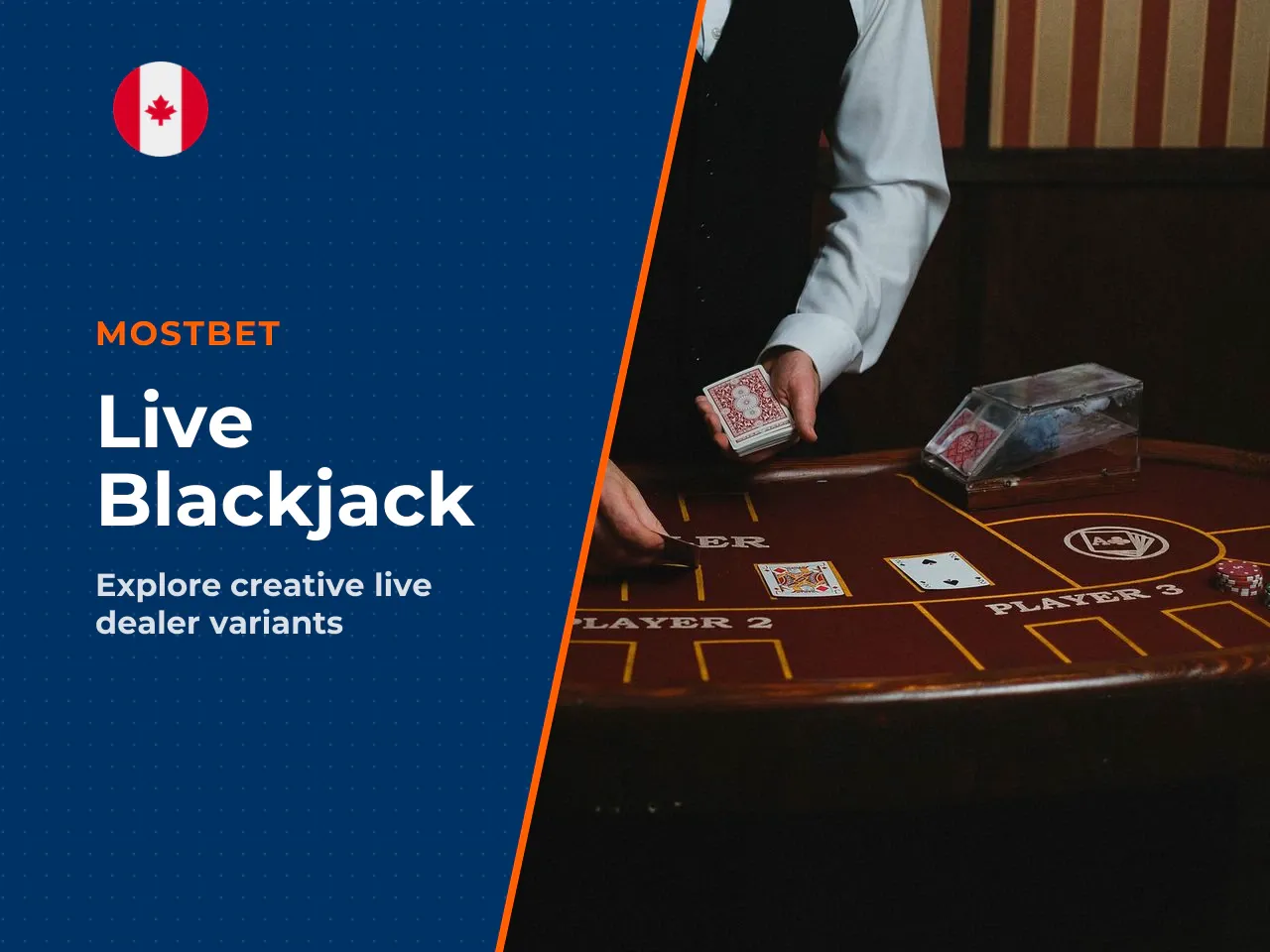
Live studios employ creative mechanics like Lightning Blackjack and Infinite Blackjack to manage heavy traffic. Infinite tables allow an unlimited number of participants to play the exact same base hand, creating a communal experience with side bets like Any Pair (up to 25:1), 21+3 (up to 100:1), Hot 3 (up to 20:1), and Bust It (up to 250:1). Infinite Blackjack also includes the Six Card Charlie rule, granting an automatic win if a player draws six cards without busting.
Lightning Blackjack attaches random multipliers ranging from 2x to 25x onto winning hands, activated by a separate Lightning side bet alongside the main wager. This drives up volatility substantially. Free Bet Blackjack, one of the most popular variants in both Las Vegas and online lobbies, lets you double and split for free on eligible hands.
The catch? The house compensates by pushing on a dealer 22, resulting in a house edge of roughly 1.33% under optimal play. These table differences cater to specific risk appetites, so it pays to understand what you are signing up for before clicking "join."
Your choice of operator dictates the security of your deposits, the speed of your withdrawals, and the legitimacy of the rule sets applied to your deck. You must verify a brand's regulatory status and software transparency before evaluating their promotional banners.
"Legalization and regulation of online gambling in the US and Canada can reduce the most negative consequences for consumers." - Morgan State University, The Socio-Economic Impact of Legalizing Interactive Gaming, 2024. https://www.morgan.edu/Documents/ADMINISTRATION/CENTERS/DASG/MSU%20Center%20for%20DASGR-%20Problem%20Gambling%20Report%20Feb%2014%202024.pdf
A reliable platform supplies a comprehensive catalogue covering basic RNG tables and high-tier live variants from trusted developers like Evolution Gaming or Playtech. The presence of free demo modes confirms the operator does not force players instantly into real stakes. Look for robust mobile performance, ensuring load times do not interfere with quick betting decisions. A quality licensed online casino with demo modes should offer at minimum several classic RNG titles, multiple live-dealer tables operating 24/7, and mobile-responsive interfaces that work smoothly even on slower connections.
For Canadian players specifically, checking whether the platform supports CAD deposits via Interac or popular e-wallets saves frustration later. Currency conversion fees eat into your bankroll silently, and the best blackjack casino options for online blackjack Canada players handle CAD natively.
The bonus looks attractive until you read the wagering limits carefully. Standard deposit match bonuses routinely restrict blackjack contribution weighting to a mere 10% because the game carries such a low house edge.
Here is what that means for your bankroll: a stated 30x wagering requirement efficiently balloons into a 300x requirement if you play blackjack exclusively. A CAD 100 bonus would demand CAD 30,000 in handle to clear. If the contribution weighting falls below 15%, the bonus is structurally unplayable for blackjack. Skip it. Compare platforms strictly on real payout speed for Interac or preferred e-wallets, completely bypassing unplayable bonus terms.
A genuinely fair offer features at least 20% blackjack contribution with wagering no higher than 30x.
When evaluating payment convenience, check withdrawal processing times and limits. Some operators process Interac e-Transfer payouts within 24 hours, while others take 3 to 5 business days. The difference matters when you are trying to cash out a win, not wait for it.
Players routinely search for tactical clarifications that extend beyond basic table rules. The digital environment heavily alters historical strategies that originated in physical venues.
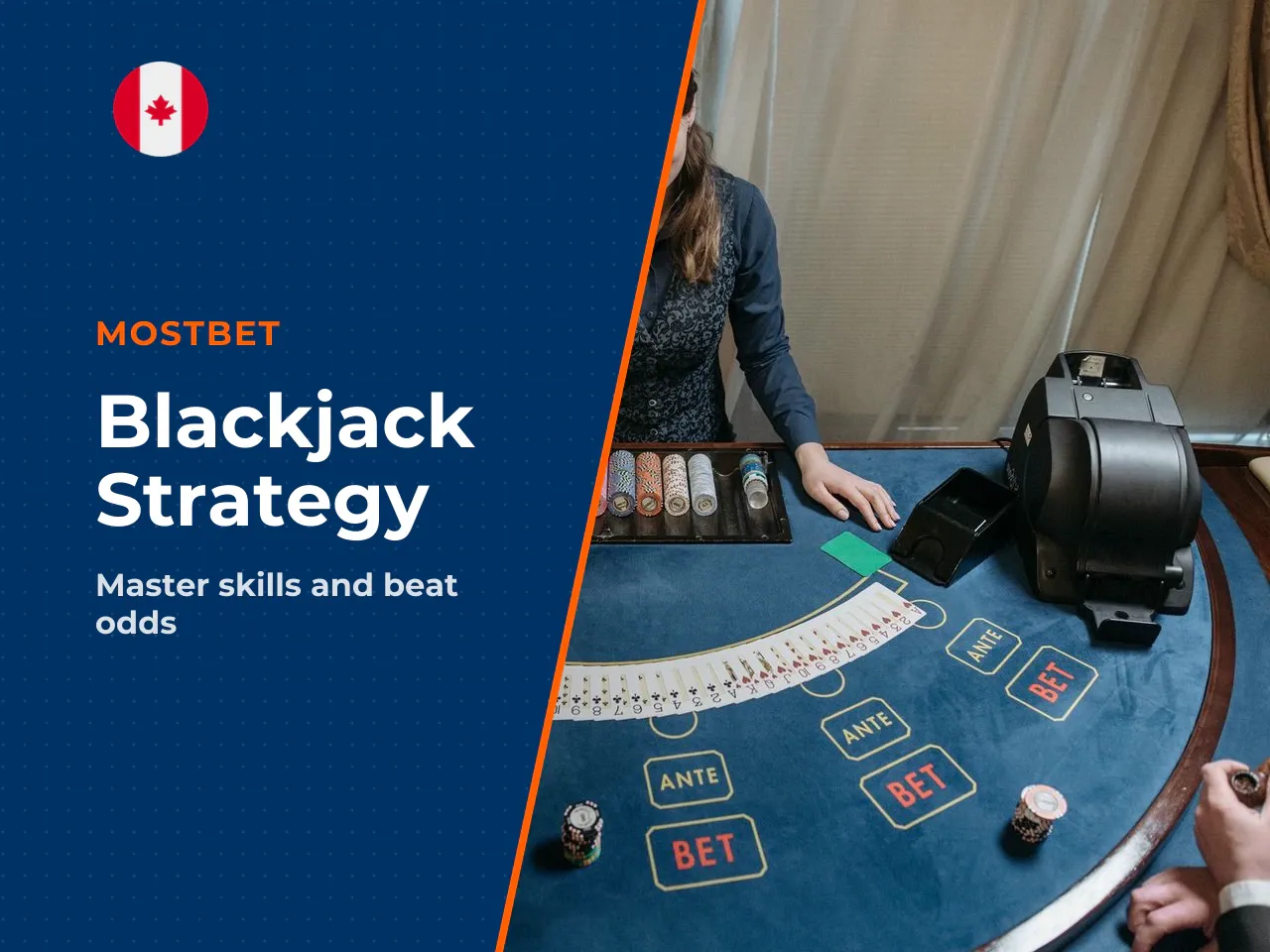
Blackjack demands a mix of statistical skill and inherent luck. While you cannot control which cards appear, applying basic strategy reduces the house edge to roughly 0.5% and materially changes your long-run results compared to intuition-based play. Independent testing bodies such as eCOGRA and GLI confirm that strategic decisions influence outcomes. Blackjack is not a pure-chance slot machine.
So, can you count cards online? Traditional card counting, like the Hi-Lo method, assigns values to every card dealt: low cards (2-6) receive +1, neutral cards (7-9) receive 0, and high cards (10-Ace) receive -1. A player maintains a "running count" and divides it by the estimated number of decks remaining to calculate the "true count."
When the true count is high, the remaining shoe is rich in 10-value cards and Aces, statistically favouring the player. In a physical casino with deep shoe penetration, this technique can tilt odds.
Online, however, applying these techniques is a complete waste of time. In standard software games, the Random Number Generator automatically reshuffles the entire virtual deck after every single hand. There is no running count to maintain. In live dealer environments, studios deploy Continuous Shuffling Machines (CSMs) or cut the shoe at very low penetration rates (under 50%). These countermeasures constantly inject used cards back into the active mix, rendering any running count meaningless. Even if penetration appeared reasonable, online casinos employ software that detects suspicious betting patterns and restrict accounts accordingly.
"Data were obtained from PlayNow.com, a platform operated by the British Columbia Lottery Corporation and available only to residents of the province." - Zhang et al., Within-Session Chasing of Losses and Wins in an Online eCasino, Scientific Reports, 2024. https://pubmed.ncbi.nlm.nih.gov/39223230/
Therefore, relying on basic strategy remains your sole viable instrument for playing mathematically sound blackjack online in Canada. Play for fun, stay in control, and respect your established limits.
Start with classic (multi-deck) blackjack at a 3:2 payout table. The rules are standardised, strategy charts are widely available, and the house edge sits at approximately 0.5% under optimal play. Avoid 6:5 tables, side-bet-heavy variants, and Lightning-style games until you are completely comfortable with basic strategy. There is no rush. The tables will still be there next week.
A disciplined starting bankroll equals at least 50 times your preferred minimum bet. If you play at CAD 1 per hand, deposit CAD 50. This provides enough runway to absorb normal variance without depleting your funds in a single downswing. Never deposit money you cannot afford to lose. Set a deposit limit through the casino's responsible gambling tools before your first session, and treat that limit as a hard ceiling, not a suggestion.
You have the rules, the math, and the strategy framework. Here are three concrete next steps:
Disclaimer: This information is general in nature and does not replace professional advice. Online gambling is regulated at the provincial level in Canada. Play responsibly and within your established limits. If you or someone you know has a gambling problem, contact ConnexOntario at 1-866-531-2600 or call 1-800-GAMBLER.